



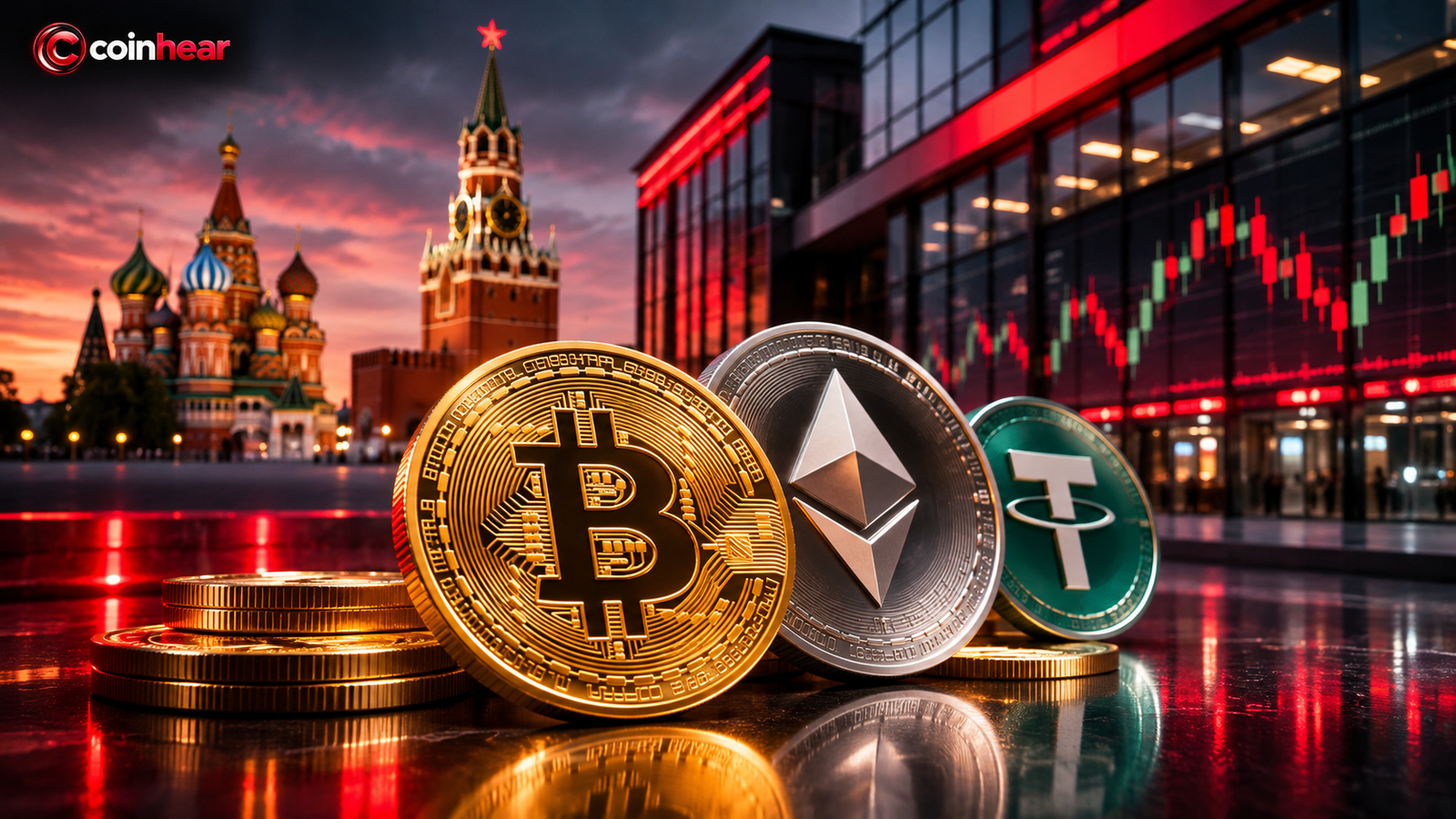
Moscow Exchange plans to launch Bitcoin, Ethereum and USDT trading on December 1, 2026, marking a significant step in Russia’s development of a regulated cryptocurrency market.
The exchange intends to begin with pilot transactions and gradually connect financial institutions as they become technically ready. The announcement comes as the Bank of Russia finalizes rules governing cryptocurrency access for retail and professional investors.
Moscow Exchange Targets December 1 for Crypto Trading
In an official announcement published on November 2, Moscow Exchange confirmed plans to make digital currency transactions available to financial market participants beginning December 1, 2026.
The initial market will support three major digital assets:
- Bitcoin (BTC): The world’s largest cryptocurrency by market capitalization.
- Ethereum (ETH): The native asset of the Ethereum blockchain.
- Tether (USDT): A stablecoin designed to track the value of the US dollar.
The launch is planned as a phased pilot rather than an immediate opening to every investor.
Financial institutions and other eligible participants will join as their systems become ready.
How Moscow Exchange’s Crypto Market Will Work
Rather than building a completely separate trading platform, Moscow Exchange plans to use technology already supporting its securities market.
Cryptocurrency transactions will be incorporated into the unified clearing infrastructure of the National Clearing Centre.
According to the exchange, trading hours are expected to run from 6:50 a.m. until 11:50 p.m. Moscow time.
The platform also plans to support same-day settlement, next-day settlement and swap transactions for liquidity management.
These features are intended to help established financial market participants access digital currencies through familiar trading and clearing arrangements.
Russia Finalizes Bitcoin and Ethereum Trading Rules
The planned launch follows new cryptocurrency regulations introduced by Russian authorities.
On November 6, the Bank of Russia announced finalized rules identifying Bitcoin, Ethereum and USDT as cryptocurrencies eligible for trading by non-qualified investors through regulated channels.
Those rules are scheduled to take effect on November 17, 2026.
The regulatory start date and Moscow Exchange’s planned December 1 launch are separate milestones.
November 17 establishes the relevant investor-access rules, while December 1 remains the exchange’s target for beginning its own pilot operations.
Retail Investors Face Testing and Purchase Limits
Russia’s regulatory framework distinguishes between qualified and non-qualified investors.
Non-qualified investors will need to pass a knowledge assessment before purchasing approved cryptocurrencies.
They will also face an annual purchase limit of 300,000 Russian rubles through each intermediary.
Qualified investors are not subject to the same annual purchase ceiling, although testing and risk-awareness requirements still apply.
These restrictions mean the new framework does not represent unrestricted cryptocurrency trading for the general public.
Why Bitcoin, Ethereum and USDT Were Selected
The Bank of Russia’s eligibility criteria emphasize established cryptocurrencies with sufficient market history, liquidity and capitalization.
Bitcoin and Ethereum are among the most widely traded digital assets globally.
USDT provides a dollar-linked digital asset commonly used in cryptocurrency trading and liquidity management.
Starting with these three assets allows the exchange to introduce its market with a limited initial selection before potentially expanding to additional instruments.
What the Launch Could Mean for Russia’s Crypto Market
The development could bring cryptocurrency activity closer to Russia’s established financial infrastructure.
For brokers and other professional participants, using an existing exchange and clearing framework may reduce the operational complexity of entering the digital asset market.
It could also create a more standardized environment for price discovery and trade execution.
However, the actual impact will depend on participation, trading volume, liquidity and the effectiveness of the new market infrastructure.
Regulatory restrictions and international sanctions may also complicate the market’s development.
Will Cryptocurrency Payments Become Legal in Russia?
The creation of a regulated cryptocurrency trading market does not mean that cryptocurrencies can automatically be used for ordinary domestic payments.
Russia continues to restrict the use of digital currencies to pay for goods and services within the country.
Trading and investment rules should therefore be distinguished from regulations governing payments and settlement.
What Happens Next?
Several milestones will determine how the planned rollout develops.
November 17: Retail Trading Rules
The Bank of Russia’s finalized cryptocurrency-access rules are scheduled to become effective.
December 1: Moscow Exchange Pilot
The exchange aims to begin pilot transactions involving Bitcoin, Ethereum and USDT, with participants joining gradually.
Broker and Custody Infrastructure
Market participants will need operational systems capable of supporting trading, clearing and digital asset custody.
Future Asset Expansion
Moscow Exchange has indicated that additional digital currencies and digital assets could be introduced over time, although no specific expansion schedule has been confirmed.
Conclusion
Moscow Exchange’s planned December 1 cryptocurrency trading launch represents an important development in Russia’s evolving digital asset market.
With Bitcoin, Ethereum and USDT expected to be the first supported assets, the exchange is preparing to integrate cryptocurrency transactions into established financial market infrastructure.
Nevertheless, the initial rollout will be gradual, and retail investors will face testing and purchase restrictions.
The coming weeks will reveal how quickly participating institutions can connect to the platform and whether the new market attracts meaningful liquidity.
Disclaimer: This article is for informational purposes only and does not constitute financial or investment advice. Cryptocurrency investments involve substantial risk.
