



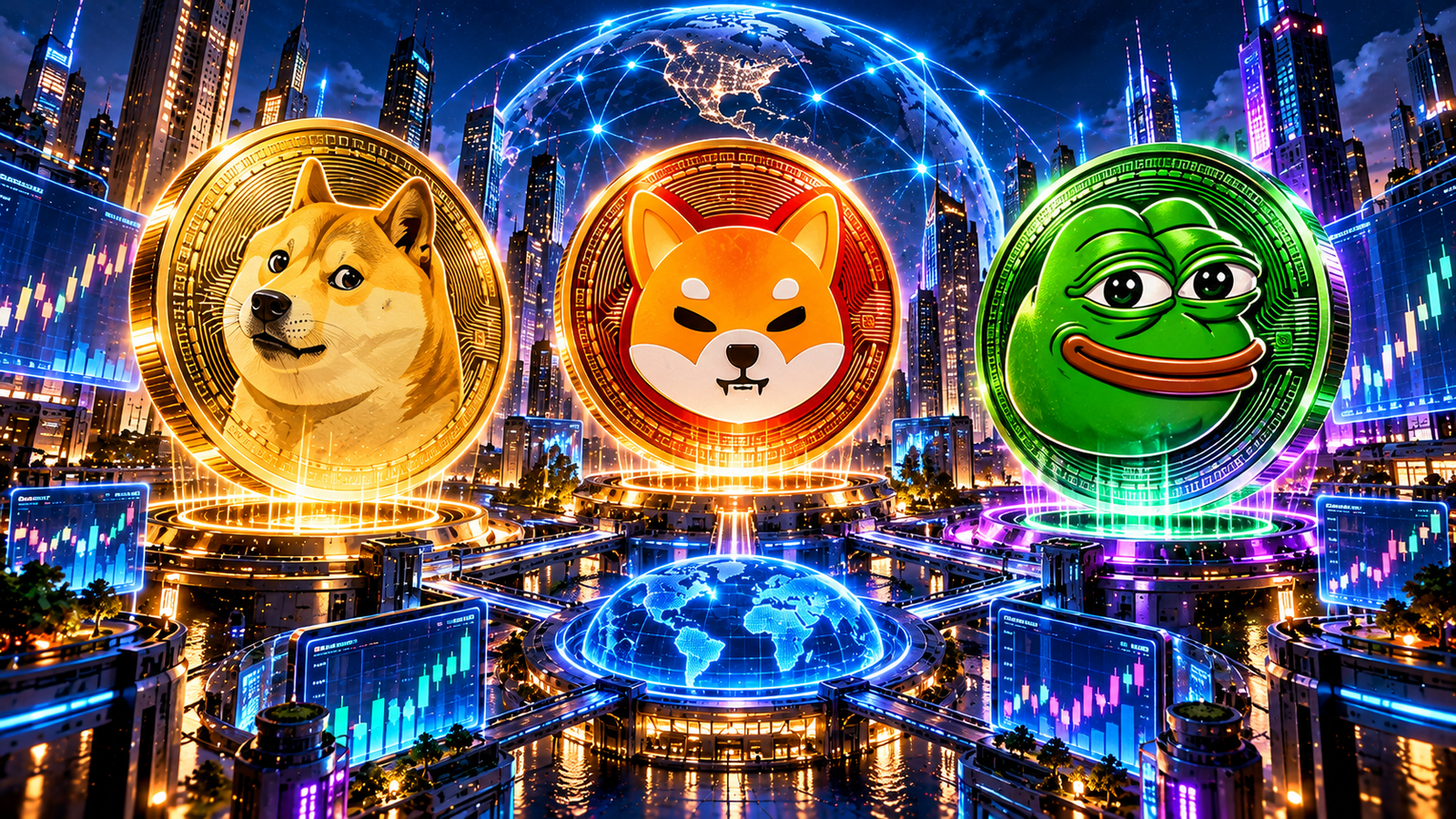
Meme coins remain one of the most recognizable and speculative segments of the cryptocurrency market in 2026. Digital assets such as Dogecoin (DOGE), Shiba Inu (SHIB), and Pepe (PEPE) have attracted attention through internet culture, online communities, and social media-driven trading.
Unlike cryptocurrencies primarily associated with blockchain infrastructure or financial applications, meme coins often derive much of their popularity from branding, community participation, and market sentiment. However, their high volatility and exposure to speculation create substantial risks for investors.
What Are Meme Coins?
Meme coins are cryptocurrencies inspired by internet memes, popular characters, cultural trends, or online communities.
Many begin as humorous projects but can develop large communities and active trading markets.
Prices are frequently influenced by social media discussions, speculative demand, exchange listings, and broader cryptocurrency market conditions.
Although some meme coin projects develop additional products or applications, investors should distinguish genuine utility from promotional claims.
Dogecoin (DOGE): The Original Meme Cryptocurrency
Dogecoin is one of the earliest and best-known meme cryptocurrencies.
Created in 2013, Dogecoin features the Shiba Inu dog associated with the popular Doge internet meme.
Unlike many meme tokens, Dogecoin operates on its own blockchain and uses a proof-of-work consensus mechanism.
The project emphasizes community participation and peer-to-peer digital payments.
Dogecoin’s official website describes it as an open-source cryptocurrency supported by a decentralized network of computers.
Despite its recognizable identity, DOGE remains exposed to significant price volatility and speculative trading.
Shiba Inu (SHIB): From Meme Token to Broader Ecosystem
Shiba Inu is an Ethereum-based cryptocurrency project that became widely known through its dog-themed branding and online community.
Unlike Dogecoin, SHIB originated as a token rather than the native currency of an independent proof-of-work blockchain.
The wider Shiba Inu ecosystem has promoted initiatives involving decentralized trading and blockchain infrastructure.
However, ecosystem development does not guarantee rising token prices or sustainable investment returns.
Investors should assess individual products, security arrangements, token economics, and actual adoption.
Pepe (PEPE): Internet Culture Meets Crypto Speculation
PEPE is a meme token associated with the Pepe the Frog internet character.
It became known for its recognizable internet-inspired branding and community-driven trading activity.
As with other meme tokens, market interest can change rapidly as traders react to online discussions, liquidity conditions, and broader cryptocurrency trends.
Users should also be cautious about similarly named tokens and impersonation attempts, particularly when interacting with decentralized exchanges.
Why Do Meme Coins Become Popular?
Meme coins often gain attention because their branding is easy to recognize and share across social platforms.
Humor, community identity, and viral content can attract users who might otherwise have limited interest in cryptocurrency technology.
Online communities can also encourage discussion, content creation, and speculative trading.
However, a large follower count or a trending hashtag does not necessarily indicate a project’s financial strength or long-term viability.
How Social Media Influences Meme Coin Prices
Social media platforms play an important role in the meme coin market.
Posts from influential accounts, viral videos, trending discussions, and speculative rumors can generate sudden increases in attention.
When market liquidity is limited, a rapid increase in buying or selling activity may contribute to sharp price movements.
Traders should be careful about interpreting online excitement as evidence of genuine demand.
Coordinated promotion, misleading claims, and manipulated engagement can distort market sentiment.
Market Capitalization vs Token Price
One of the most common mistakes among beginner cryptocurrency traders is assuming that a token with a very low price is automatically inexpensive or undervalued.
Market capitalization is generally calculated by multiplying a token’s circulating supply by its market price.
For example, a token priced at $0.0001 with 100 billion circulating tokens would have a market capitalization of approximately $10 million.
Therefore, investors should consider circulating supply, total supply, token distribution, and liquidity rather than focusing exclusively on the number of zeros in a token’s price.
Why Liquidity Matters for Meme Coins
Liquidity describes how easily an asset can be bought or sold without significantly affecting its market price.
Low-liquidity meme tokens may experience substantial slippage, particularly during periods of intense trading.
Large holders can also influence prices when their transactions represent a meaningful share of available market liquidity.
Investors should examine trading volume, liquidity depth, token ownership concentration, and available trading venues.
Major Risks of Meme Coin Investing
Meme coins can experience extreme price fluctuations and may lose most or all of their market value.
- High volatility: Prices can move sharply over short periods.
- Concentrated ownership: Large holders may have a significant influence on the market.
- Low liquidity: Investors may struggle to sell without major price slippage.
- Rug pulls: Malicious promoters may abandon projects or exploit token liquidity.
- Pump-and-dump schemes: Artificial hype may be used to attract buyers before large sell-offs.
- Impersonation scams: Fake tokens and fraudulent websites can target investors.
- Regulatory uncertainty: Legal treatment depends on the facts and circumstances of particular assets and transactions.
What Has the SEC Said About Meme Coins?
In February 2025, the US Securities and Exchange Commission’s Division of Corporation Finance published a staff statement discussing certain meme coins.
The statement described typical meme coins as assets often purchased for entertainment, cultural participation, and speculation.
It expressed the staff’s view that transactions involving meme coins matching the statement’s description generally do not constitute securities offerings under federal securities laws.
However, the statement is not legally binding Commission rulemaking and does not automatically apply to every token described as a meme coin.
The legal treatment of a particular asset or offering depends on its actual characteristics and circumstances.
How Can Beginners Evaluate Meme Coin Projects?
Before considering a meme coin, investors should research the project’s background, blockchain network, token supply, liquidity, ownership distribution, and security risks.
They should verify token contract addresses using trustworthy sources and avoid relying exclusively on promotional social media posts.
Promises of guaranteed profits, artificial urgency, and unrealistic return projections are warning signs.
Even well-known meme coins can experience significant losses, and popularity should never be mistaken for investment safety.
Meme Coin Outlook for the Rest of 2026
Dogecoin, Shiba Inu, and PEPE illustrate how internet culture and cryptocurrency markets can intersect.
Community activity, speculative demand, trading liquidity, and broader market conditions will continue to influence the meme coin sector.
However, predicting which tokens will outperform is exceptionally difficult, particularly when sentiment changes quickly.
For investors following meme coins in 2026, understanding market capitalization, liquidity, token distribution, and risk is more important than chasing viral price predictions.
Frequently Asked Questions About Meme Coins
What is the difference between Dogecoin and Shiba Inu?
Dogecoin is the native cryptocurrency of its own blockchain, while SHIB originated as an Ethereum-based token. Their technical structures and ecosystems differ.
Are meme coins safe investments?
Meme coins are highly speculative and can experience severe price declines. Investors may lose their entire investment.
Can a meme coin with a low price reach $1?
A token’s potential price depends partly on its circulating supply and the market capitalization that price would imply. A low current price alone does not indicate realistic upside.
Do all meme coins have no utility?
No. Some projects offer payment functionality or develop broader ecosystems, but claims about utility should be independently evaluated.
Sources
- Dogecoin — Official Website
- Dogecoin — What Is Dogecoin?
- SEC Division of Corporation Finance — Staff Statement on Meme Coins
- SEC Commissioner Caroline Crenshaw — Response to Staff Statement on Meme Coins
Disclaimer: This article is for educational purposes only and does not constitute financial or investment advice. Meme coins are highly speculative digital assets and may result in substantial or total financial loss.
