



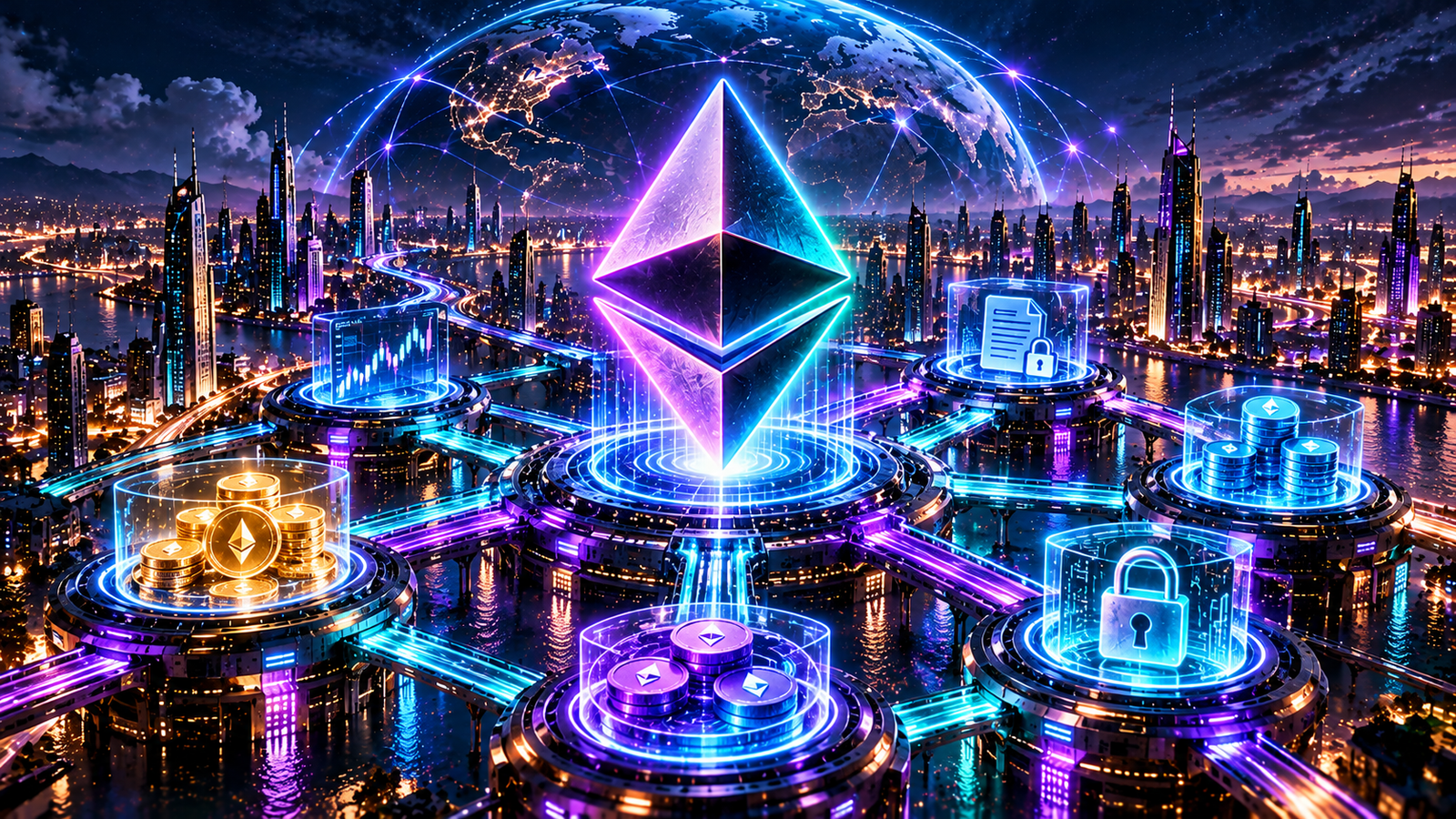
Decentralized finance, commonly known as DeFi, continues to reshape how people interact with cryptocurrency markets in 2026. By using blockchain technology and smart contracts, DeFi applications allow users to trade digital assets, lend and borrow cryptocurrencies, and provide liquidity without relying on traditional financial intermediaries for every transaction.
However, decentralized finance also introduces significant risks, including software vulnerabilities, liquidations, scams, and market volatility. Understanding both its opportunities and limitations is essential before using any DeFi platform.
What Is Decentralized Finance (DeFi)?
DeFi refers to financial applications built on blockchain networks that use programmable software to perform activities traditionally associated with financial institutions.
Instead of depending entirely on banks, brokers, or centralized exchanges, many DeFi services use smart contracts to process transactions according to predefined rules.
Ethereum helped establish the modern DeFi ecosystem, although decentralized financial applications also operate on other blockchain networks.
How Does DeFi Work?
DeFi applications typically combine blockchain networks, digital wallets, cryptocurrencies, and smart contracts.
A user connects a compatible wallet to an application and authorizes specific transactions. The underlying smart contracts then execute the programmed operations.
For example, a decentralized exchange may use liquidity pools to facilitate token swaps without requiring a conventional order-book intermediary.
However, decentralization varies between protocols. Some applications retain administrative controls, depend on centralized infrastructure, or rely on third-party services.
What Are Smart Contracts?
Smart contracts are programs deployed on blockchain networks that execute instructions when specified conditions are met.
They can manage digital assets, calculate lending obligations, facilitate token exchanges, and automate other financial processes.
Because smart contracts may control valuable assets, programming mistakes or security weaknesses can result in substantial losses.
Publicly available code and security audits can help users assess a protocol, but neither guarantees complete protection.
Decentralized Exchanges (DEXs)
Decentralized exchanges allow users to swap supported cryptocurrencies through blockchain-based protocols.
Many DEXs rely on automated market makers, which use liquidity pools rather than matching every trade directly between buyers and sellers.
Liquidity providers deposit assets into these pools, enabling other users to trade.
DEX users should consider transaction fees, price slippage, liquidity depth, malicious tokens, and smart contract security.
DeFi Lending and Borrowing
Decentralized lending protocols allow users to supply cryptocurrency assets to lending markets and potentially receive variable interest.
Borrowers often provide collateral worth more than the amount they borrow, although lending models vary.
If the collateral value declines significantly, the position may be liquidated according to the protocol’s rules.
Borrowing costs and lending yields can change rapidly based on market conditions and demand.
Unlike insured bank savings accounts, DeFi lending positions generally do not carry equivalent deposit protections.
Liquidity Pools and Yield Farming
Liquidity pools hold digital assets that support decentralized trading and other financial operations.
Users who provide liquidity may receive a portion of trading fees or additional token incentives.
Yield farming refers broadly to strategies intended to generate returns by supplying assets to DeFi protocols.
However, advertised yields are not guaranteed profits. Returns can change quickly, and token price movements, impermanent loss, security incidents, and incentive reductions can outweigh earnings.
Why Are Stablecoins Important to DeFi?
Stablecoins are widely used in decentralized finance because they aim to maintain a relatively stable value against assets such as the US dollar.
They can serve as trading pairs, collateral, lending assets, and settlement instruments.
However, stablecoins remain exposed to risks involving reserves, redemption, liquidity, regulation, and temporary or permanent loss of their intended peg.
What Is Total Value Locked (TVL)?
Total value locked, or TVL, is a commonly used measure of assets deposited into decentralized finance protocols.
Analysts use TVL to evaluate ecosystem activity, but the metric has limitations.
Changes in token prices can influence reported TVL even when the number of deposited tokens remains unchanged.
Different data providers may also apply different methodologies, and TVL alone does not establish whether a protocol is secure or financially sustainable.
Major Risks of DeFi in 2026
Users should understand the following risks before interacting with decentralized finance applications:
- Smart contract exploits: Software vulnerabilities can expose deposited assets to theft or loss.
- Liquidation risk: Borrowers may lose collateral when market prices move against their positions.
- Impermanent loss: Liquidity providers may underperform simply holding their deposited assets.
- Oracle manipulation: Incorrect or manipulated price data can affect lending and trading protocols.
- Scams and phishing: Fraudulent applications and malicious wallet approvals can compromise funds.
- Stablecoin depegging: Assets intended to track a stable reference price may lose value.
- Regulatory uncertainty: Rules and legal obligations differ across jurisdictions and activities.
DeFi vs Traditional Finance
Traditional finance typically relies on regulated institutions to provide custody, credit, payments, and investment services.
DeFi can make certain financial functions accessible through blockchain networks and automated software.
Potential advantages include around-the-clock operation, transparent transaction records, and programmable financial services.
However, traditional institutions may offer consumer protections, customer support, dispute-resolution mechanisms, and deposit safeguards that are generally absent from decentralized protocols.
Neither model is automatically superior for every financial need.
How Can Beginners Evaluate DeFi Platforms?
Before using a DeFi application, beginners should research its official documentation, supported blockchain networks, security arrangements, and risk disclosures.
They should understand how wallet approvals work, verify contract addresses through trustworthy sources, and consider whether a protocol has undergone independent security reviews.
It is also important to understand withdrawal conditions, liquidity availability, collateral requirements, and the possibility of losing deposited assets.
Security audits reduce certain risks but cannot eliminate them.
What Is the Future of DeFi Beyond 2026?
Decentralized finance may continue evolving through improvements in blockchain scalability, wallet usability, security practices, stablecoin infrastructure, and connections with traditional financial markets.
Institutional experimentation with blockchain-based financial applications could also influence the industry’s development.
However, widespread adoption will depend on whether DeFi applications can demonstrate practical usefulness, sustainable economics, effective security, and compliance with applicable regulations.
DeFi offers new ways to build and access financial services, but understanding the technology and managing its risks remain essential.
Frequently Asked Questions About DeFi
Is DeFi the same as cryptocurrency?
No. Cryptocurrency refers to digital assets, while DeFi refers to financial applications and protocols built using blockchain technology and digital assets.
Can you lose money in DeFi?
Yes. Users can lose money through price declines, liquidations, software vulnerabilities, scams, or stablecoin failures.
Is DeFi completely decentralized?
Not always. Some protocols depend on administrators, governance groups, centralized interfaces, or external infrastructure.
Does DeFi offer guaranteed returns?
No. DeFi yields fluctuate, and even products advertising relatively stable returns can experience significant losses.
Sources
- Ethereum.org — Decentralized Finance Explained
- Ethereum.org — Introduction to Smart Contracts
- Ethereum.org — Smart Contract Security
- SEC Investor.gov — Crypto Asset Interest-Bearing Accounts
Disclaimer: This article is for educational purposes only and does not constitute financial advice. Cryptocurrency and DeFi activities involve substantial risk, including the possible loss of all deposited funds.
